

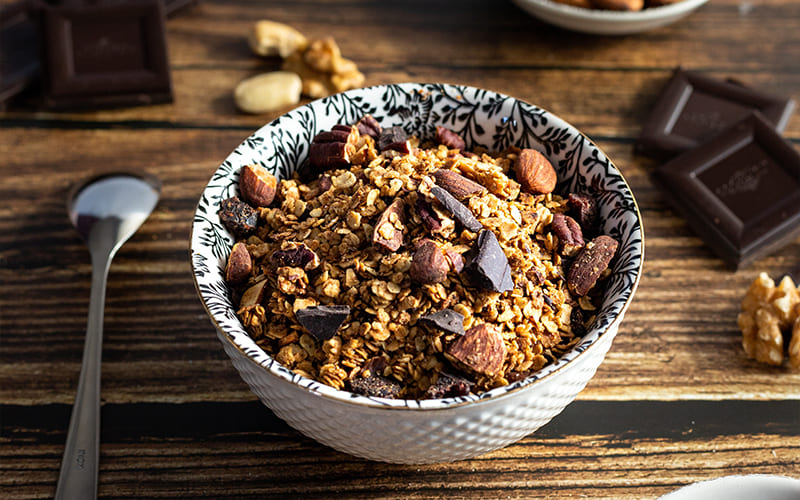
09 Jul Culinary History: The Origin of Granola
Granola is a mixture of oats with nuts, honey, and other sweeteners like brown sugar, and sometimes puffed rice, which is typically baked until crispy and toasted. Raisins, dates, or even chocolate are occasionally added. It is often eaten combined with yogurt, honey, fresh fruit, or milk. It is sold in bags and/or boxes found in most supermarkets or stores.
This food originated in the United States in the late 19th century, thanks to Dr. James Cale Jackson in 1863. Concerned with finding a variant for the vegetarian diet, he invented this cereal mix which he called “granula,” a term that evolved over the years to its current name.
The doctor’s initial preparation served a purpose: to address illnesses that the patient might present with a healthy stomach. For this reason, he mixed brittle cake with unsifted wheat flour, baked it for the first cooking, then crumbled it and returned it to the oven for a few more minutes. However, the result was a hard product that needed to be soaked in milk to be consumed.

Finally, its popularisation came in 1969 (the height of the hippie movement in the United States) during the Woodstock Music and Art Festival, a hippie gathering with rock music that lasted 3 days. There, granola was consumed massively by all attendees as it provided energy, was economical, and very easy to eat.
Recognizing the commercial opportunity, large corporate industries took the recipe and began producing it. This marked a break in the relationship between the food and the hippie movement, as they opposed capitalist practices. In 1972, the first commercial granola appeared and from then on, along with the emergence of organic diets, versions of this cereal kept appearing: in bars, flakes, for snacks, dietary, etc. Additionally, chemical ingredients have been left behind and replaced by healthier ones like nuts, dried fruits, and various nutritious seeds.





















Sorry, the comment form is closed at this time.