

26 Mar Culinary History: Candied Nuts (Garrapiñadas)
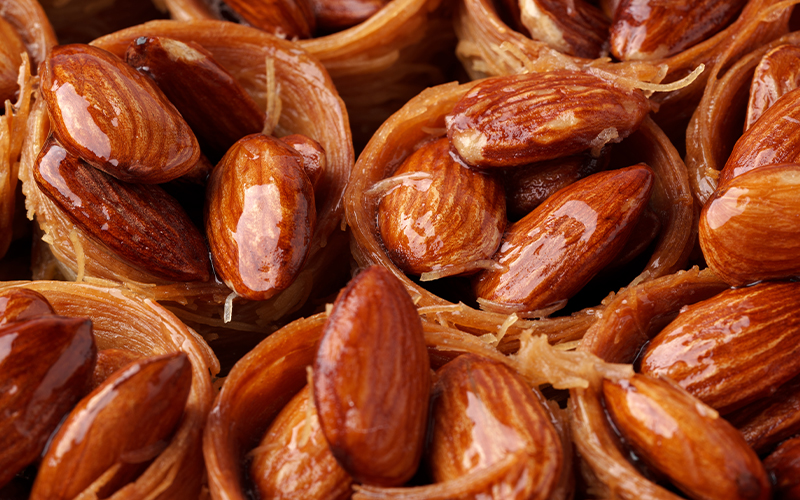
Candied nuts, or garrapiñadas, are one of the most iconic sweets in our country, irresistible for their flavor and crunchy texture. These treats consist of nuts, usually almonds, coated in a layer of caramel made from melted sugar. This coating not only sweetens the nuts but also gives them a crunchy texture and a dark color, creating a perfect combination of flavors.
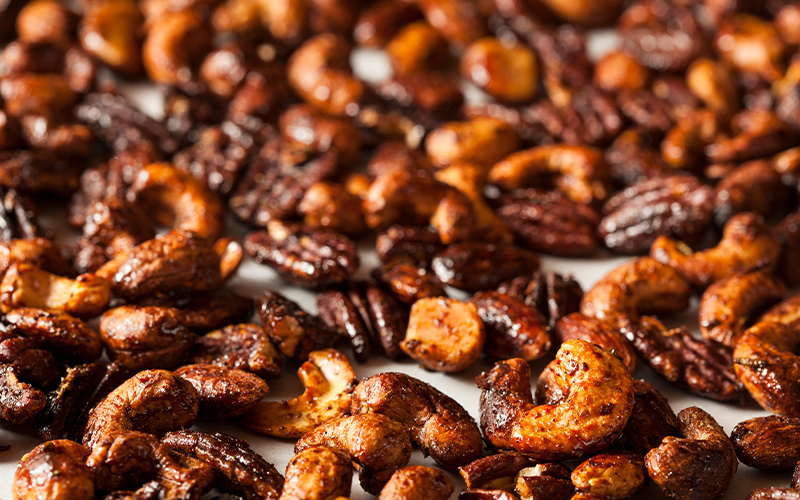
While the traditional recipe uses almonds, innovation has made it possible to find candied sunflower seeds, peanuts, pistachios, or even coconut, turning them into an ideal ingredient for salads, ice creams, or yogurt, adding a special crunchy touch.

The origin of garrapiñadas remains uncertain, as there are no documents certifying their exact creation. However, some believe their origins might trace back to the region of Provence in France, where there is a similar sweet called croquant, made with almonds, honey, and sugar. It is also known that in Ancient Egypt, honey was used to preserve nuts.

In Spain, it is said that the origin of garrapiñadas can be found in Briviesca (León), where a street vendor popularized this treat. The story goes that the vendor offered small samples to attract people to the fair games, and over time, it became associated with local tradition. Today, garrapiñadas remain an integral part of our festivals and fairs, filling the air with their sweet aroma from street vendors, often accompanied by caramel apples and cotton candy.

















Sorry, the comment form is closed at this time.