


02 Abr Culinary History: Jordanian Cuisine
Jordanian cuisine is a reflection of the country’s rich history and cultural heritage, influenced by civilizations such as the Nabateans, the Ottoman Empire, and Bedouin traditions. Rooted in fresh, simple ingredients, this cuisine combines bold flavors and traditional techniques that celebrate hospitality and generosity, hallmarks of Jordanian culture.

Among the most notable traditional dishes of Jordan are:
Mansaf: Considered the national dish, it consists of lamb cooked in a dried yogurt sauce (jameed), served over rice, and garnished with almonds and pine nuts. It is a symbol of hospitality and is enjoyed during celebrations and family gatherings.
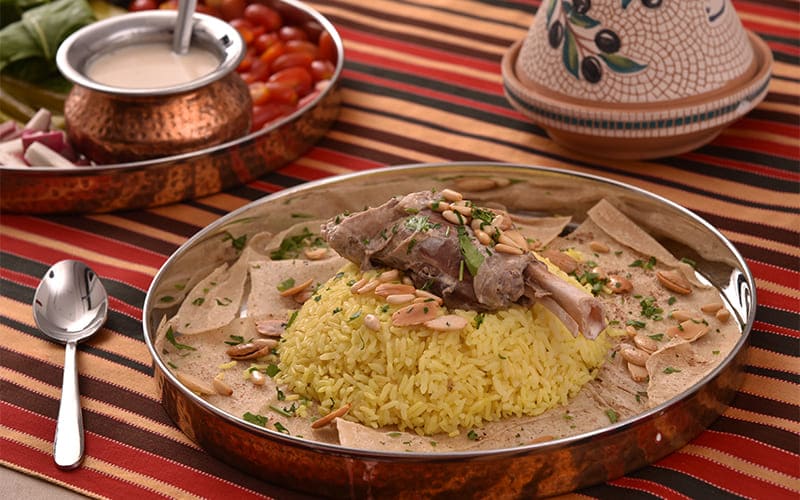
Maqluba: Its name means “upside down” because it is cooked and then flipped to serve. This dish is a casserole made with rice, meat (chicken or lamb), and vegetables such as eggplant or cauliflower, seasoned with spices.

Kebab: Skewers of minced lamb or beef mixed with spices, grilled to perfection. They are typically served with pita bread and sauces like tahini or labneh.

Fattet Hummus: A breakfast or appetizer dish made with chickpeas, toasted bread, yogurt, and tahini, topped with almonds or pine nuts.

Kunafa: A dessert made with layers of filo pastry or shredded phyllo dough filled with soft cheese and soaked in syrup flavored with rose or orange blossom water.
























Sorry, the comment form is closed at this time.